Community Planning
Part of the Climate Change exhibition.
Whether cities or neighborhoods, communities can provide the means for their residents to reduce CO2 emissions and live more sustainably.
- Densely populated communities reduce land use and encourage walking.
- Public green spaces enhance the quality of life.
- Public transportation cuts traffic and pollution.
- Pedestrian and biking zones reduce driving and parking needs and curb pollution.
- Reuse of building sites reduces new construction.
Some Examples:
New Songdo City, South Korea, will accommodate 65,000 residents, about 250,000 incoming daily commuters, more than 300 acres of parks, as well as businesses and cultural centers, all within 1,415 acres. It is being built to meet the U.S. Green Building Council's Leadership in Energy and Environmental Design (LEED®) standards.
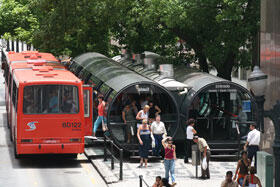
Curitiba, Brazil, has a bus system with high-capacity loading stations, transporting nearly 2 million riders each day and replacing some 40,000 cars.
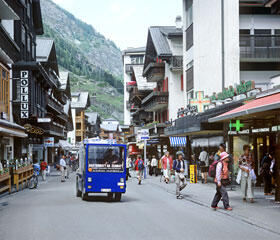
Zermatt, Switzerland, bans fossil-fuel-powered vehicles within city limits. Trains bring people in and electric taxis transport them around town.
The Thoreau Center for Sustainability, San Francisco, California, inhabits a historic hospital building built in 1902.