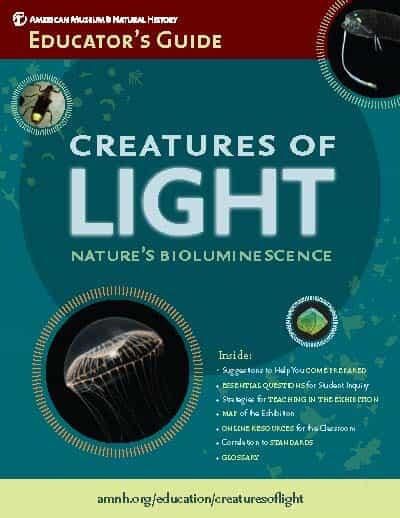
For Educators: Creatures of Light
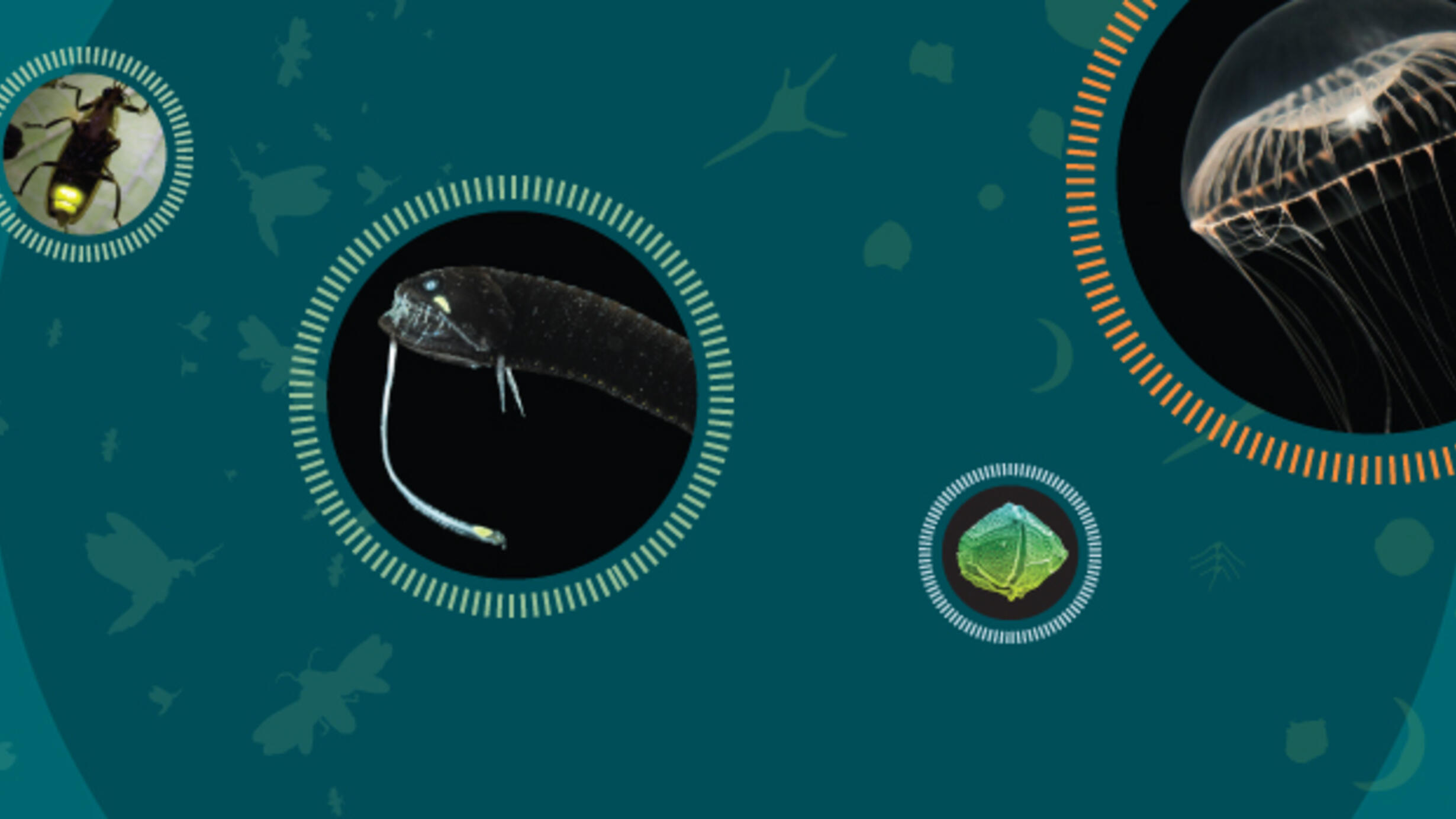
Have you ever captured a glowing firefly? On a warm summer evening, a firefly's light seems rare and magical. Yet the tree of life is spangled with organisms that blink, glow, flash, and glitter. Welcome to the world of bioluminescence - the generation of light by living things.
Educators Guide and Materials
The LeFrak Class of the Month Essay Contest invites New York City students in grades K-8 to submit essays about their Museum visit to the LeFrak Family Gallery, where this fall they can experience Creatures of Light: Nature’s Bioluminescence.
More Resources For Educators
Use these free online resources before or after your visit to further explore themes presented in the Creatures of Light exhibition.
Video
They Glow!
Most of the deep sea is very dark, with little or no sunlight. But that doesn't mean marine animals are in the dark! Learn how these clever creatures create their own light.
Hands-on Activity
Make Your Own Creatures of Light
Ever wonder why some organisms flash, blink, or glow? Discover how by making your own land and ocean creatures that generate light.
Science Bulletins: Jellies Down Deep
Featuring spectacular underwater footage, this Bio Bulletin follows scientists at the Monterey Bay Aquarium Research Institute as they retrieve jellies from the deep.
-
More About This Resource...
-
Bioluminescence exhibit takes an in-depth look at the astonishing variety of bioluminescent organisms and explores the various ways they glow, the functions of bioluminescence, and how scientists study this remarkable characteristic. This comprehensive guide will help you explore the exhibit with your students. It includes:
- detailed background information to help you prepare for your museum fieldtrip, including an overview of the exhibit's concepts and terms as well as essential questions for student inquiry;
- guided explorations and questions to help you investigate the exhibit with your students;
- an exhibit map that makes it easy to find the six areas of focus;
- several pre-, during-, and post-visit activities to do with your students; and
- a listing of online resources for further exploration.
-
Topic
Biology -
Subtopic
Biodiversity -
Subtopic
National Science Education Standards
Science as Inquiry CONTENT STANDARD A:
• understanding about scientific inquiryScience and Technology CONTENT STANDARD E:
• understanding about science and technologyHistory and Nature of Science CONTENT STANDARD G:
• science as a human endeavorGrades 5-8:
Physical Science CONTENT STANDARD B:
• transfer of energyLife Science CONTENT STANDARD C:
• structure and function in living systems• regulation and behavior• diversity and adaptations of organismsHistory and Nature of Science CONTENT STANDARD G:
• nature of scienceGrades 9-12:
Physical Science CONTENT STANDARD B:
• chemical reactions• interactions of energy and matterLife Science CONTENT STANDARD C:
• the cell• interdependence of organisms• behavior of organisms -
Learning Standard
National Science Education Standards
Science as Inquiry CONTENT STANDARD A:
• understanding about scientific inquiryScience and Technology CONTENT STANDARD E:
• understanding about science and technologyHistory and Nature of Science CONTENT STANDARD G:
• science as a human endeavorGrades 5-8:
Physical Science CONTENT STANDARD B:
• transfer of energyLife Science CONTENT STANDARD C:
• structure and function in living systems• regulation and behavior• diversity and adaptations of organismsHistory and Nature of Science CONTENT STANDARD G:
• nature of scienceGrades 9-12:
Physical Science CONTENT STANDARD B:
• chemical reactions• interactions of energy and matterLife Science CONTENT STANDARD C:
• the cell• interdependence of organisms• behavior of organisms
-