Parts of an Insect (Grasshopper)
Part of the Biodiversity Counts Curriculum Collection.
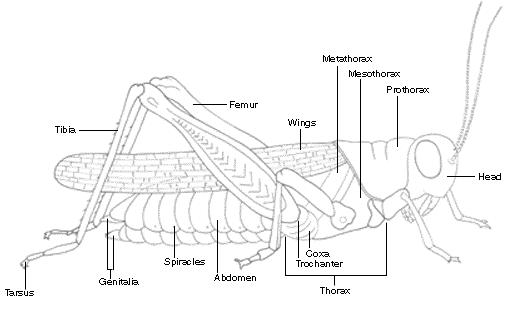
Head: The anterior part of an insect body with eyes, antennae, and mouthparts.
Thorax: The body section after the head, with the legs and wings attached. There are three sections of the thorax: the prothorax, the mesothorax, and the metathorax.
Abdomen: The posterior section of the body containing the reproductive and digestive organs.
Spiracles: Breathing pores.
Coxa: The section of a leg that is attached to the body.
Trochanter: The second segment of a leg, between the coxa and the femur.
Femur: The third segment of a leg, between the trochanter and the tibia. (Grasshoppers and other jumping insects have enlarged hind femora with powerful muscles).
Tibia: The fourth segment of a leg, between the femur and the tarsus.
Tarsus: The leg segment after the tibia, often subdivided into several sections.
Genitalia: The sexual organs.
Wings: Outgrowths of the body wall that enable insects to fly. The first pair of wings is sometimes modified into a protective covering for the hind wings.