What is a Dinosaur
Part of the Dinosaurs: Activities and Lesson Plans Curriculum Collection.
Activity for Grades K - 4
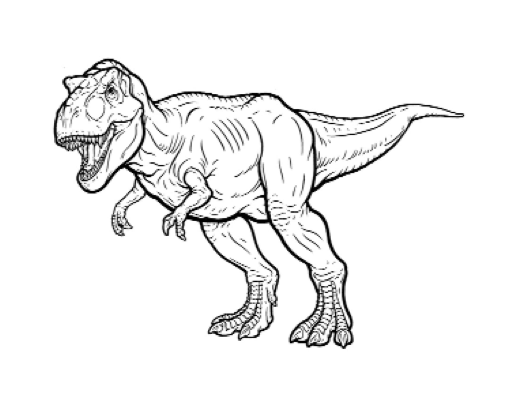
Dinosaurs are prehistoric reptiles that have lived on Earth from about 228 million years ago to the present. Modern birds are one kind of dinosaur because they share a common ancestor with non-avian dinosaurs. Non-avian dinosaurs (all dinosaurs besides birds), which are now extinct, varied greatly in shape and size. Some weighed as much as 80 tons and were more than 120 feet long. Others were the size of a chicken and weighed as little as 8 pounds. All non-avian dinosaurs lived on land. Some may have gone into the swamps and lakes for food, but they did not live entirely in water. Meat-eaters walked on two legs and hunted alone or in groups. Plant-eaters walked on either two or four legs and grazed on plants. The feature that distinguishes dinosaurs from other reptiles is a hole in the hip socket. This feature allowed dinosaurs to walk upright. Pterosaurs, or flying reptiles, and plesiosaurs, ocean-dwelling reptiles, did not have this feature and were not dinosaurs.
Objective
This activity will help students understand the difference between dinosaurs and other animals.
Materials
- Picture of a dinosaur and a picture of a lizard or alligator (from a nature magazine or calendar)
- Dinosaur or Not? duplicated for each student (PDF below)
- Crayons
Procedure
- Write What Is a Dinosaur? on the chalkboard. Tell students that today you will explore this question. Have students work in small groups. Distribute dinosaur books to each group. Give groups 10 minutes to look through the books and find three interesting facts about dinosaurs.
- Have groups report their facts to the rest of the class. Using students’ responses, create a semantic map like the one shown.
- Display the pictures of the lizard and the dinosaur. Ask students how the two reptiles are different. Point out that the lizard has legs that sprawl out to the side, while the dinosaur’s legs are directly underneath its body. Explain that dinosaurs had a hole in their hip socket that allowed them to stand upright. Other reptiles, like lizards, do not have such a hole and therefore are not dinosaurs. Call on volunteers to imitate a sprawling stance and a dinosaur stance. Have them try walking forward using each stance.
- Distribute Dinosaurs or Not? to each student. Instruct students to look carefully at each animal and to color those that are dinosaurs. When students are done, review their answers with them. (Answers: The lion, woolly mammoth, and alligator are not dinosaurs.)
- As an extension to this activity, have students play a riddle game. Have students work with a partner. Distribute index cards. Have partners choose a dinosaur or another animal. Have them write three clues that tell about the organism’s features on one side of the card. The answer to the riddle should be written on the back. Call on partners to read their clues aloud. Have the class guess what animal or dinosaur is being described.