The Green Guerillas, New York City
Part of the Biodiversity Crisis Curriculum Collection.
By John Thomas
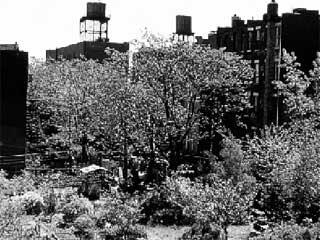
In 1974, Liz Christy, a Greenwich Village artist, cleaned up a trash-filled vacant lot on the Lower East Side and turned it into a productive community garden, now known as the Liz Christy Garden. Soon after, she and Bedford-Stuyvesant resident Hattie Carthan formed the Green Guerillas. One of their early restoration activities was to toss seed-filled water balloons over fences into the city’s abandoned lots.
The Guerillas now have 800 members and have helped neighborhood groups create and maintain 1,000 urban gardens over the last twenty-five years. In the past three years, as the gardens have become threatened with destruction by the City, the Green Guerillas has switched its focus from horticulture technical assistance and has been organizing coalitions of gardeners to lobby for their gardens’ future.
The Liz Christy Garden at the border between the East Village and the Lower East Side grows more than 1,000 different species. It has cactus and moss collections and operates a public learning center. In the East Village, the Green Oasis Community Garden has a mini-arboretum containing fifty tree species and varieties, and offers gardening lessons for children. It has also built wetland and pond habitats as part of its urban garden environment. In the South Bronx, gardeners at the Rancho Boricua garden grow traditional medicinal and culinary herbs from Puerto Rico. In Brooklyn’s Bedford-Stuyvesant, the Hattie Carthan Memorial Garden cultivates an entire city block and, with the Magnolia Tree Earth Center, provides expert assistance to urban growers.
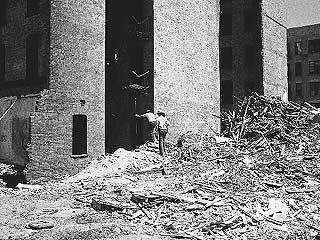
In addition to “greening” neighborhoods and providing tranquil oases of biodiversity within the city, the Green Guerillas also collaborate with the group Just Food on the City Farms Program, which helps gardeners distribute produce to local soup kitchens. By using compost-rich, low-artificial-chemical growing methods, New York City gardens do not generate the environmental pollutants associated with conventional fertilizer- and pesticide-intensive agriculture. This locally grown food also comes without the packaging and transport costs of distant-grown food. According to the Urban Agriculture Network, city gardens now account for fifteen percent of world food production.
As urban gardening continues to plant roots in vacant lots across the country, American city dwellers are coming to appreciate both the locally grown produce and the pleasures of tending the soil in their own “backyard.”
This is an excerpt from THE BIODIVERSITY CRISIS: LOSING WHAT COUNTS, edited by Michael J. Novacek, a publication of the New Press. © 2000 American Museum of Natural History. To order the book, call 1-800-233-4830.