San Marcos, New Mexico, 1998-2001
The Galisteo Basin, just southeast of Santa Fe, New Mexico, is home to thousands of years of human occupation and was the site of significant 'cultural contact' between native Pueblo Indians and Spanish colonizers. San Marcos Pueblo was one of the largest Pueblos in the Southwest (approximately 2,000 rooms) in the 15th and 16th centuries.
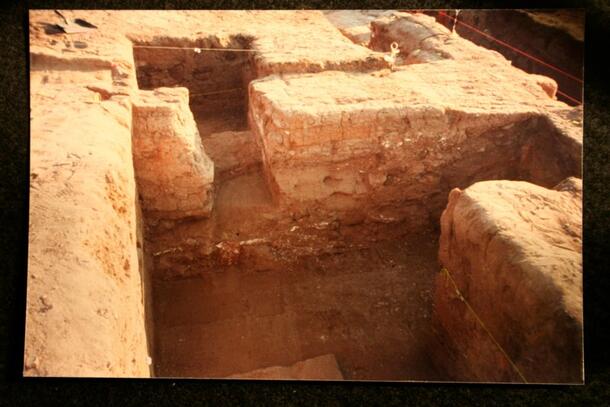
By the early 17th century, Spanish Jesuits began construction of a mission inside the Pueblo. The mission began in several converted pueblo rooms, but eventually grew into a large two story adobe church and 18-room convento, complete with priests' quarters, offices, reception area, and kitchen.
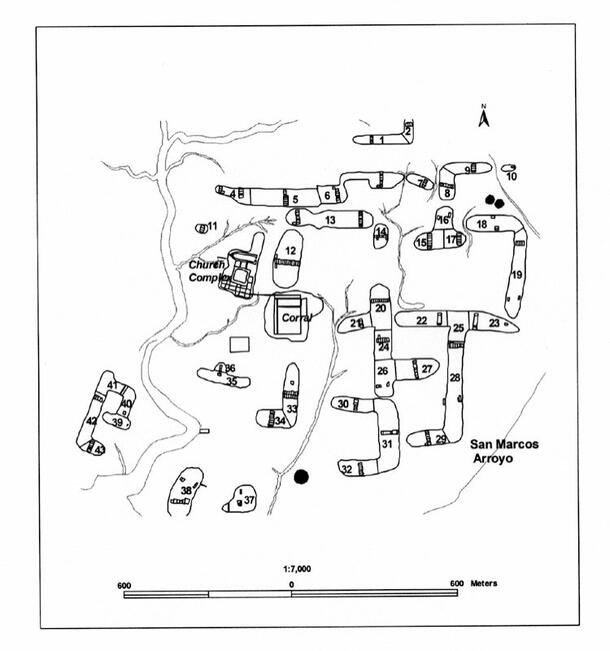
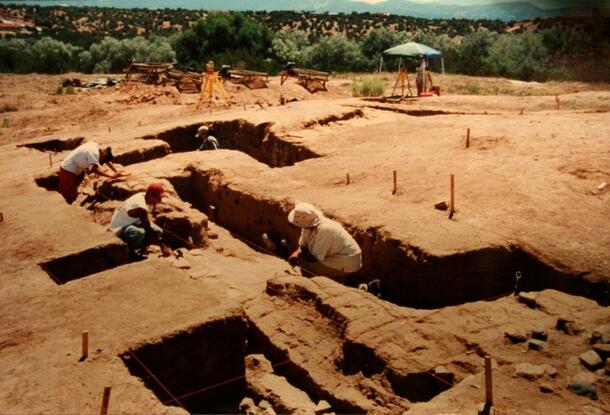
The mission lasted for approximately 70 years, until the Pueblo Revolt of 1680 resulted in the priest's deaths and the abandonment of the mission. Unlike other Southwestern missions, however, San Marcos was never re-occupied by the Spanish and remains an important 'time capsule' for archaeological research. Dr. Thomas began excavating on the Spanish Mission in 1999 with Pueblo and Hispanic interns and applied a series of cutting-edge remote sensing technology (ground penetrating radar, proton magnetometry and electrical resistivity) to better understand the site layout.
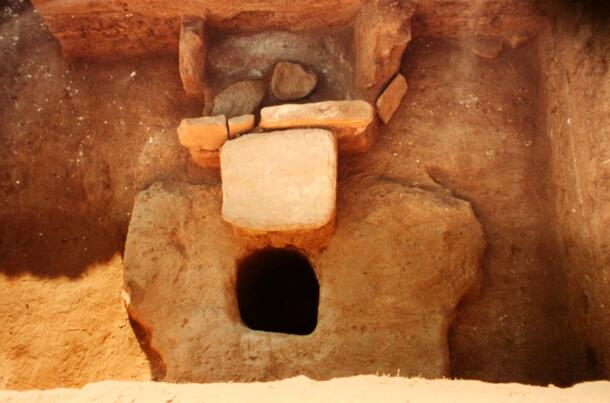
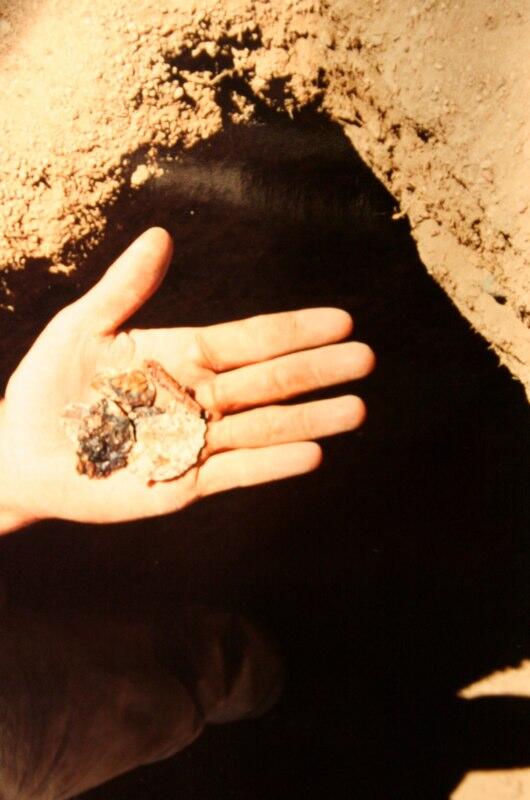
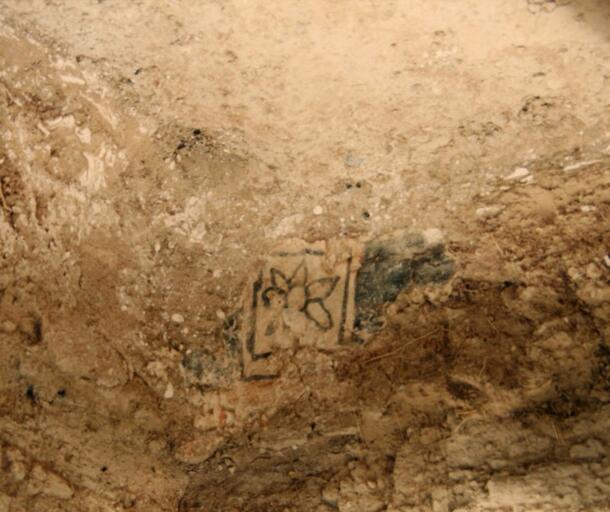
Excavations were conducted in the church, convento,and plaza. The team found few artifacts from the Spanish period an evidence that the mission had been systematically cleared out, the bell (a powerful symbol of Spanish authority) destroyed and placed in the baptismal font, and the convento and plaza converted into stables. Artifacts recovered included pieces of majollica, selenite used as for windows, cut mica that would have decorated the church walls, pieces of the mission bell, and painted plaster walls with flower and geometric motifs.