PROJECT SPACEWATCH CONTROL
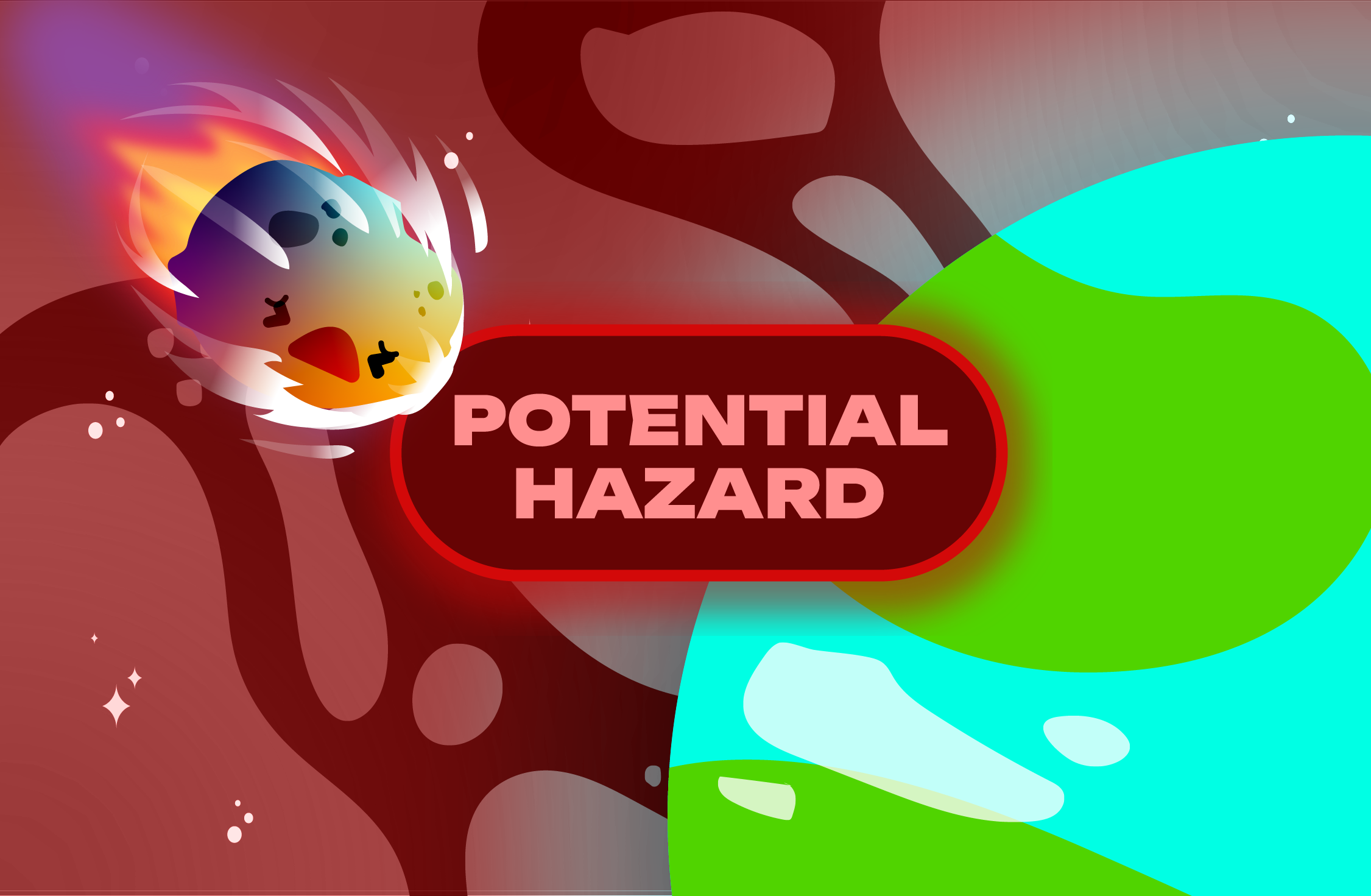
Potential Hazard
This asteroid may pass close enough to Earth to pose a collision threat. We will alert the Planetary Defense Commission so NASA can prepare to deflect it if needed!
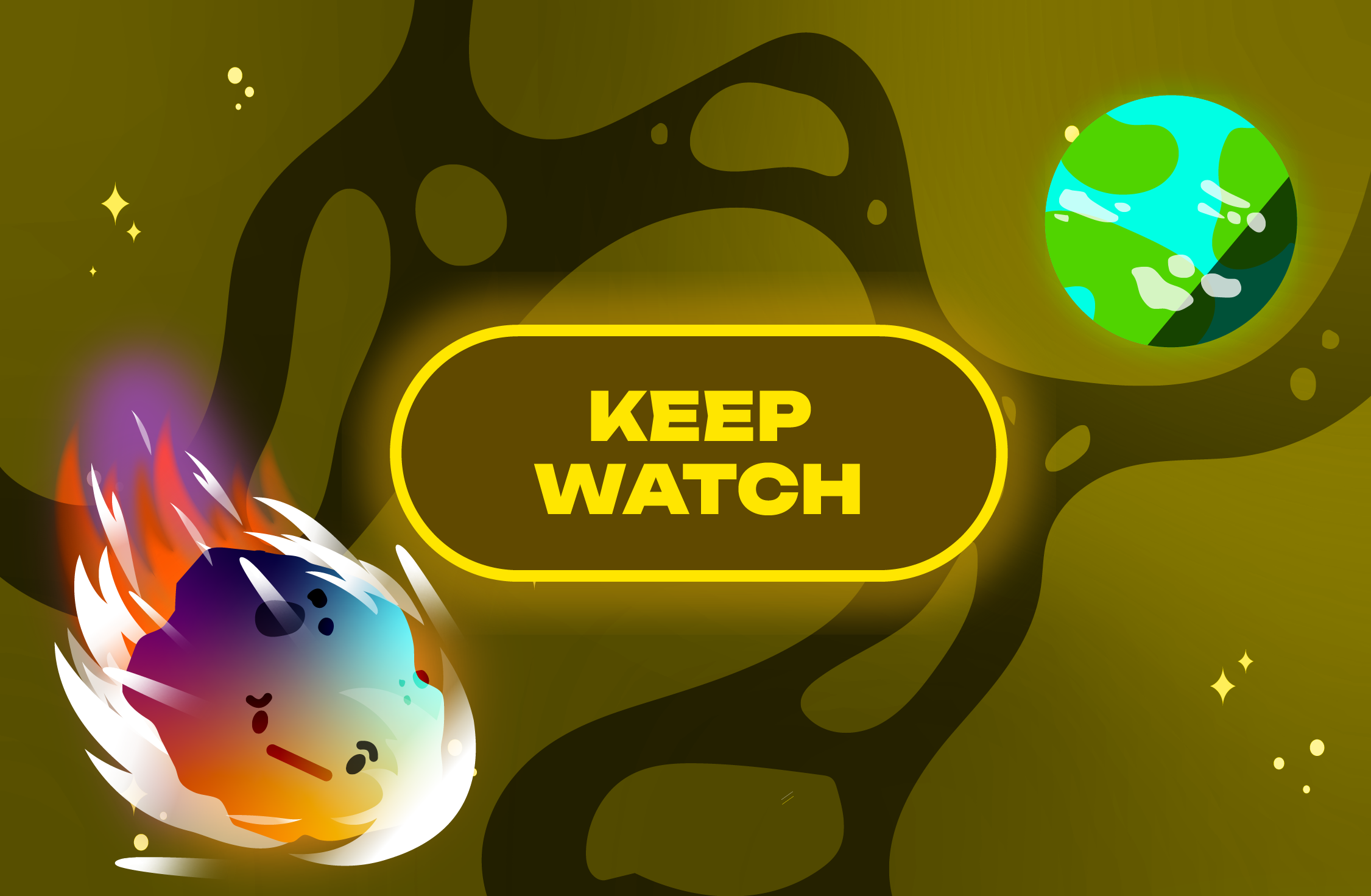
Keep Watch
This asteroid crosses Earth's orbit, but it does not come close enough to be a risk in the near future. We will continue to monitor its orbit for changes.
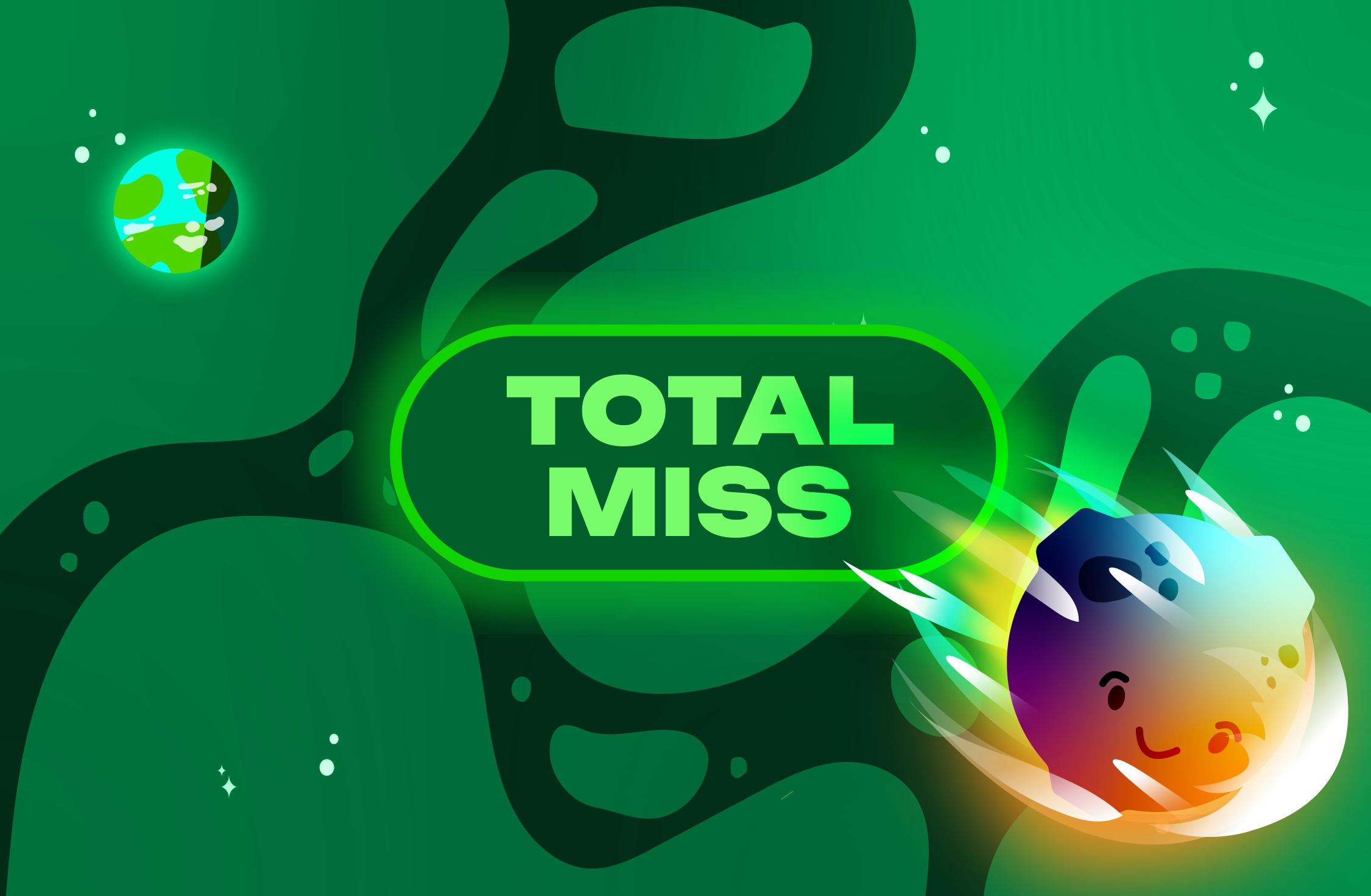
Total Miss
This asteroid's path lies entirely outside Earth's orbit, which means it will miss us. Near-Earth asteroids like this are called "Amors"!
MESSAGE CENTER
You will track asteroids moving across the night sky in your job as a Planetary Defender.
Drag the beam in the ORBITAL VIEW to change where the telescope is pointing, across the 180 degrees that it can see.
This will move the LIVE TELESCOPE FEED.
Compare the LIVE TELESCOPE FEED with the KNOWN STAR MAP. This map shows the stars that astronomers have already charted. When you find something in the telescope feed that doesn't match what is on the star map, that's not a star, it's an asteroid!
Click on it to log it!
You will need a total of five observations in the ASTEROID LOG to predict the asteroid's path in the next step.
Need a hint?
Need another hint?
Now line up the asteroid's orbit with your five observations.
Do this by dragging the orbit and adjusting the sliders to change the orbit's shape and position.
Need help?
It's time to run a simulation to see how close the asteroid might get to Earth!

Thanks for doing your part to keep track of nearby asteroids!
Now it's your turn to figure out which
asteroids will stay far from Earth's orbit,
cross our orbit, or may head our way!
Choose a level to begin