LIFE SCIENCE
The Diversity of Fishes
Classification, Anatomy and Morphology

Georgie Holland/AGE Fotostock
How do scientists document and study the most diverse vertebrate group on Earth?
What, exactly, is a fish? Find out why that’s not a simple question, and how ichthyologists determine how to classify members of the largest and most diverse of all vertebrate groups. Drawing on evolution, ecosystem diversity, and biogeography, this six-week online course follows Museum scientists into the lab.
This course begins Mar 8.
Spring 2 Session
COURSE COST
GRAD CREDIT
What, exactly, is a fish? Find out why that’s not a simple question, and how ichthyologists determine how to classify members of the largest and most diverse of all vertebrate groups. Drawing on evolution, ecosystem diversity, and biogeography, this six-week online course follows Museum scientists into the lab.
Course Format
This online course is asynchronous, giving you the flexibility to complete weekly activities at your own pace. Essays, written by our authoring scientists, are supplemented by case studies, textbook readings, videos, interactive simulations, image galleries, and more. These resources provide the foundation for assignments as well as online discussions where you will exchange questions and ideas with course faculty and other learners. The course culminates in a final project, which is your opportunity to create activities that you can use with your students.

Georgie Holland/AGE Fotostock
Connecting to Your Classroom
This course includes a variety of resources that can be adapted for use in your classroom. Participants frequently use course activities as a central component of their final project. For example, in this course you will perform a series of observations of fish anatomy that can be used to understand how fish are adapted to their environments and how they are related to other fishes.
Course Authors
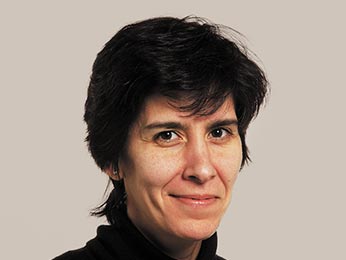
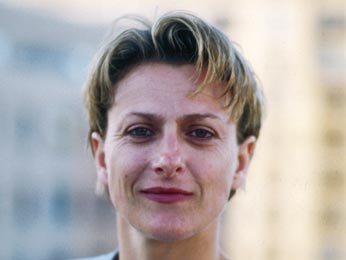
Recent Course Faculty
This course is co-taught by an experienced classroom teacher and a working scientist. With low faculty to student ratios, this powerful combination of scientific expertise and classroom application creates opportunities for discussions about the course content and how it can be taught.
Related Courses

This course begins Mar 8.
Spring 2 Session
COURSE COST
GRAD CREDIT
I have worked harder in this course than most courses just because Dr. Aquino was so kind and helpful, taking the extra time... to say 'try this' or 'why don't you try another way.' What a positive experience. I guess that is why I keep taking courses at AMNH. Offer another course—I can't wait.
I particularly enjoyed the feedback from the professors. They pushed me to think about science in a positive way.
I really learned about a branch of science that was completely foreign to me and it was very interesting. I think the best part of the course was the discussion that made some of the more complicated science accessible to me.