PHYSICAL SCIENCE
Space, Time and Motion
Physical Science

R. Hurt/Caltech-JPL
How did the universe come into being, and why does it behave the way it does? This course uses Einstein’s work to delve into the properties of motion, time, space, matter, and energy.
Grapple with fundamental questions about the origin, workings, and behavior of the universe in this six-week online course authored by world-class physicists. The course begins with the ancient Greek philosophers and continues on to Galileo Galilei, Isaac Newton, and Albert Einstein, whose work serves as the foundation for a detailed look at the properties of motion, time, space, matter, and energy. This includes understanding energy production in stars, black holes, and the Big Bang, as well as the role of the scientist in modern society.
This course begins Jan 18.
Spring 1 Session
COURSE COST
GRAD CREDIT
Grapple with fundamental questions about the origin, workings, and behavior of the universe in this six-week online course authored by world-class physicists. The course begins with the ancient Greek philosophers and continues on to Galileo Galilei, Isaac Newton, and Albert Einstein, whose work serves as the foundation for a detailed look at the properties of motion, time, space, matter, and energy. This includes understanding energy production in stars, black holes, and the Big Bang, as well as the role of the scientist in modern society.
Course Format
This online course is asynchronous, giving you the flexibility to complete weekly activities at your own pace. Essays, written by our authoring scientists, are supplemented by case studies, textbook readings, videos, interactive simulations, image galleries, and more. These resources provide the foundation for assignments as well as online discussions where you will exchange questions and ideas with course faculty and other learners. The course culminates in a final project, which is your opportunity to create activities that you can use with your students.

Alain Riazuelo, IAP/UPMC/CNRS
Connecting to Your Classroom
This course includes a variety of resources that can be adapted for use in your classroom. Participants frequently use course activities as a central component of their final project. For example, in this course you will use Einstein’s Theory of Special Relativity to examine interesting phenomena, such as how you would age on a spaceship traveling at high speeds compared to your family and friends who stay on Earth.
Course Authors
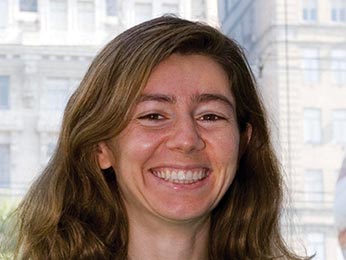
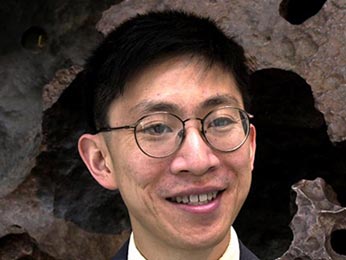
Recent Course Faculty

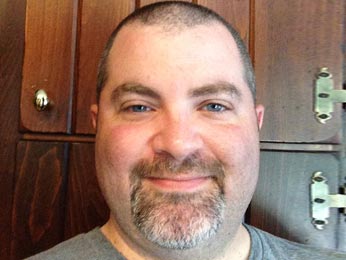
This course is co-taught by an experienced classroom teacher and a working scientist. With low faculty to student ratios, this powerful combination of scientific expertise and classroom application creates opportunities for discussions about the course content and how it can be taught.
Related Courses


This course begins Jan 18.
Spring 1 Session
COURSE COST
GRAD CREDIT
The whole subject was interesting. I never thought I could contribute to a physics discussion, but after this class I feel more comfortable and willing to continue to read about the subject matter.
The best part of this course was the pure science it engaged in... I loved it. I can't tell you how thought-provoking this class was for me. It engaged my mind and challenged my prior understanding of topics. I now feel comfortable with Einstein's relativity theories in a way I never did before. I especially enjoyed the fundamental examination of basic universal phenomena such as motion and energy.
I really appreciated the level of discussion from all of the instructors. They provided information as well as posed questions, providing a true and enriching conversation. I've learned a lot!