Butterfly Metamorphosis
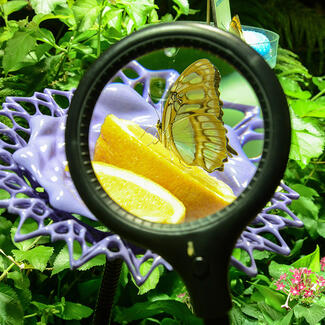
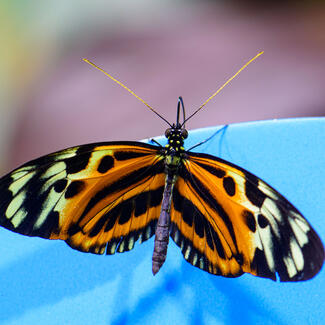
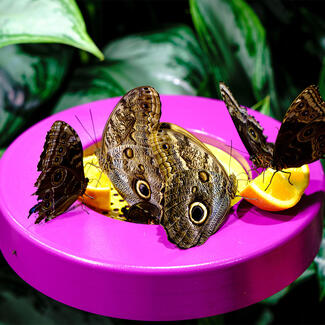
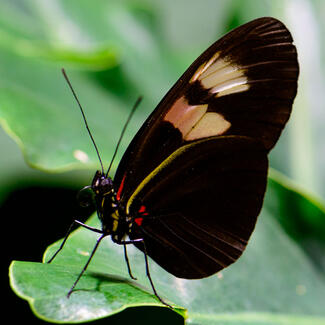
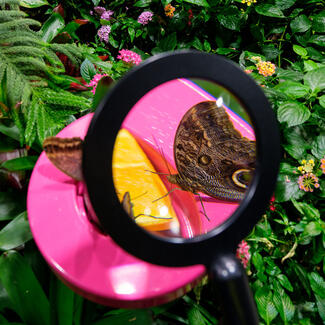
Part of the Davis Family Butterfly Vivarium exhibition.
 Alvaro Keding/© AMNH
The butterfly begins life as an egg, emerges as a caterpillar, and then undergoes a complete change in body form during development.
Egg
The eggs of butterflies and moths come in a variety of shapes unique among insects. They are often rounder than the eggs of other insects, and feature a range of sculptural spines, ribs, and scales on their exterior.
Like a chicken egg, a butterfly egg has a shell to protect it and a yolk to provide food as the embryo develops. Some butterflies lay only a single egg at a time, while others can lay 100 at once.
Larva
Insects begin their life as a worm-like larva. Butterflies and moths are no different–we just call them "caterpillars" instead.
In this phase, caterpillars focus on eating and growing. As they grow, they shed their skin and pass through increasingly large stages called "instars." Some species can grow so much that they end this phase 100 times larger than they started!

Caterpillars live to eat and start doing it as soon as they hatch. For some species, a caterpillar's first meal is its own eggshell.
To avoid being eaten themselves, caterpillars use defenses such as spines, poison, and camouflage. For example, many caterpillars eat plants that contain toxic chemicals. As they eat, the caterpillars store the toxins in their bodies. When they become butterflies, they remain poisonous, and predators learn to stay away.
Pupa
A butterfly pupa, also called a chrysalis, forms a cuticle that encloses its head and body to shield against extreme temperatures, parasites, and drying out.

Many moth species wrap themselves in a silk covering, called a cocoon, for the same kind of protection.
Pupa don't move or eat. They use stored energy to transform at the cellular level.
During this process, called metamorphosis, body tissue breaks down and reforms as wings, legs, and other adult parts.
 A late-stage chrysalis of a monarch butterfly
 Tina Shaw/USFWS/Flickr
 A monarch butterfly emerging from its chrysalis
Tina Shaw/USFWS/Flickr
Changing from a caterpillar to a butterfly or moth prevents adults and young from competing for the same food or risking infection from the same diseases.
Adult
When it's fully grown, the primary goal of a butterfly or moth is to disperse and reproduce.
Mating pairs find each other in the same habitat where their host plants grow. They use scents and elaborate aerial dances for courtship displays.
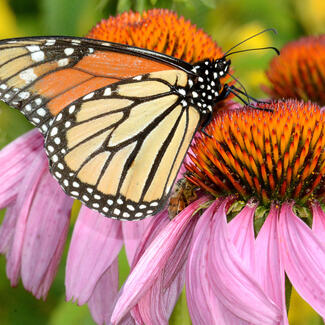
For some butterflies, their lifecycle takes place across entire continents. Every few generations, monarch butterflies fly over 2,000 miles (approximately 4,500 km) away from where they hatched to lay their eggs.
Read more about Davis Family Butterfly Vivarium