Anne and Bernard Spitzer Hall of Human Origins
The Anne and Bernard Spitzer Hall of Human Origins pairs fossils with DNA research to present the remarkable history of human evolution. The hall covers millions of years of human history, from early ancestors who lived more than six million years ago to modern Homo sapiens, who evolved 200,000 to 150,000 years ago.
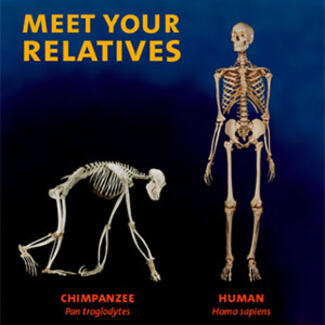
This innovative exhibition combines discoveries in the fossil record with the latest genomic science to explore the most profound mysteries of humankind: who we are, where we came from, and what is in store for the future of our species. The hall explores human biology and anatomy, traces the path of human evolution, and examines the origins of human creativity.
Featuring four life-sized tableaux of Homo ergaster, Homo erectus, Neanderthals, and Cro-Magnons, the Spitzer Hall of Human Origins shows each species in its habitat, demonstrating the behaviors and capabilities that scientists think it had. Also displayed are a variety of important fossil casts, including the 1.7-million-year-old “Turkana Boy.” The hall also features examples of what are thought to be some of humans’ earliest forms of artistic expression, including an original limestone engraving of a horse carved about 25,000 years ago in southwestern France.
This hall is included with any admission.
Enjoy free tickets for General Admission, special exhibitions, giant-screen movies, planetarium shows, and more!
 In a dramatic representation of an imagined prehistoric encounter between predator and prey, a Barosaurus rears up to protect its young from an attacking Allosaurus. The enormous Barosaurus is the world’s tallest freestanding dinosaur mount, and composed of casts of real bone, since fossils are too heavy to support in this way.
