Climate Change

Earth’s climate is changing. Global temperature is rising, weather patterns are shifting and other effects may be on our horizon. While we can’t predict the severity of those impacts in a particular place or time, we can nonetheless see—and measure—many changes.
Yes, climate has changed throughout Earth’s long history, but this time is different. For the first time, complex human societies are facing the consequences of climate change worldwide. Plant and animal species already threatened by fragmented habitats are feeling the impact. And for the first time, humans are causing it.
Can we avoid disastrous climate change by altering the way we live? There is still time. But it will take a worldwide effort, lasting generations. And it needs to start now.
Today, atmospheric CO2 is at a level that has not been seen on Earth for at least 800,000 years, and probably much longer.
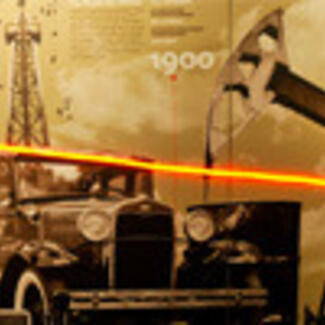
By the 1600s, coal was replacing wood as a common fuel. In addition to being readily available, coal had another great advantage over wood: it is more energy-dense.
A transparent, protective blanket envelops Earth. It is the atmosphere, which admits enough of the energy streaming from the Sun to warm our planet and retains enough of that heat to keep it livable.
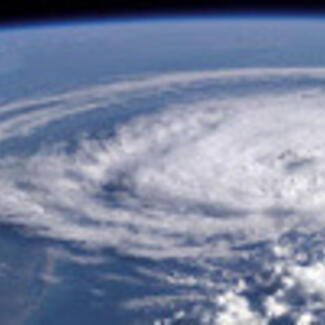
A warming atmosphere affects more than just air temperatures: while heat waves and droughts are becoming more common and intense, rainstorms are also becoming more powerful, sometimes provoking dangerous floods.
Ice is melting at the poles. Impacts will be global.
Ice shelves are massive, floating platforms of ice that surround the ice-covered continents of Antarctica and Greenland. When they melt, sea level isn't directly affected, because this ice is already in the ocean.
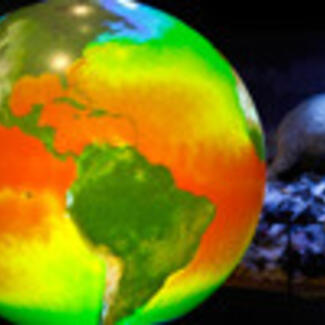
The ocean regulates climate. Changing waters mean a changing climate.
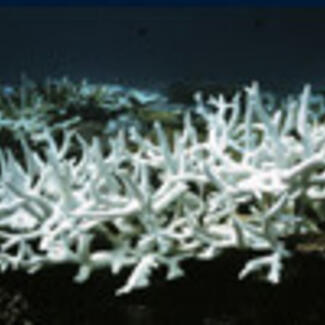
Changing ocean waters will harm many ocean organisms, disrupt ocean food chains and affect the ocean's ability to remove CO2 from the atmosphere, thereby altering Earth's climate.
The last few decades have seen larger areas of the world enduring longer--and drier--droughts. What's more, many of those droughts have been hotter than in the past.
As our planet warms, rainstorms and other extreme events are becoming more intense. What sort of changes will we have to make as global warming continues?
Lowering emissions to help curb climate change is possible, starting right now. Consuming less, riding the train instead of driving solo or unplugging idle electronics may seem like small steps, but these measures make a difference, especially when whole communities do them.
Though rapidly reducing global emissions will require a range of actions--from preserving Earth's forests to changing the ways we travel--providing clean sources of electricity is most critical.
This exhibit was curated by Edmond A. Mathez (Curator of Earth and Planetary Sciences) and Michael Oppenheimer (Professor of Geosciences and International Affairs at Princeton University).
The Heat is On: Fast Facts from the American Museum of Natural History
The Museum established a Sustainable Practices Committee in 1998.
How much can you reduce your carbon dioxide emissions? Is it worth it?
The American Museum of Natural History worked with a number of collaborators to produce Climate Change: The Threat to Life and A New Energy Future.
Climate Change: The Threat to Life and A New Energy Future was organized by the American Museum of Natural History, New York, in collaboration with the Abu Dhabi Authority for Culture and Heritage, United Arab Emirates, The Cleveland Museum of Natural History, The Field Museum of Chicago, Instituto Sangari, São Paulo, Brazil, Junta de Castilla y León, Spain, Korea Green Foundation, Seoul, Natural History Museum of Denmark, Copenhagen, Papalote Museo del Niño, Mexico City and Saint Louis Science Center.
Additional support for Climate Change and its related educational programming has been provided by Mary and David Solomon, the Betsy and Jesse Fink Foundation, the Linden Trust for Conservation, and the Red Crane Foundation.