Frogs: A Chorus of Colors
May 30, 2009 - January 12, 2010

May 30, 2009 - January 12, 2010
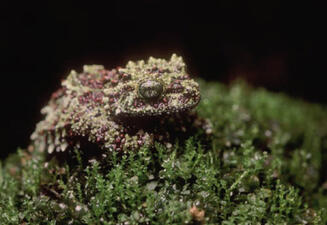
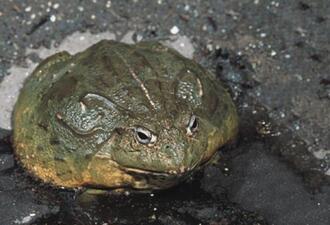
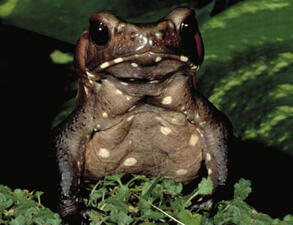
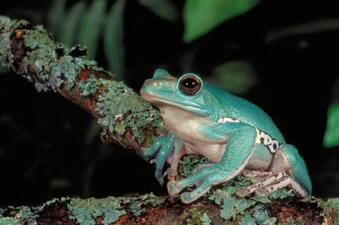
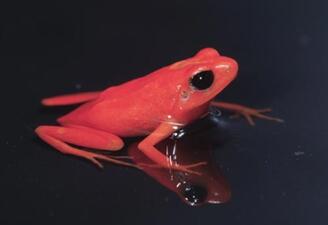
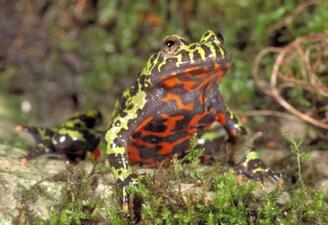
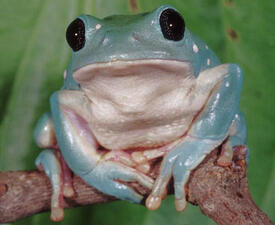
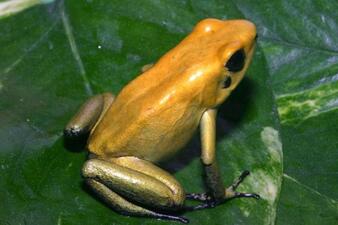
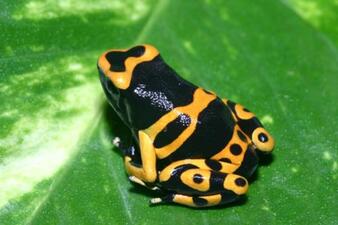
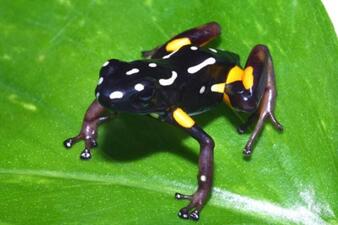
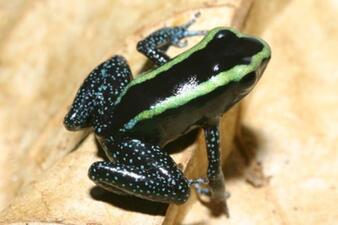
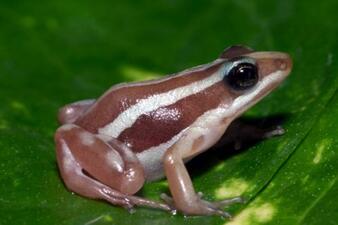
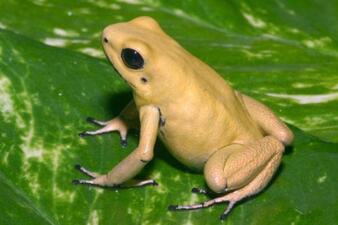
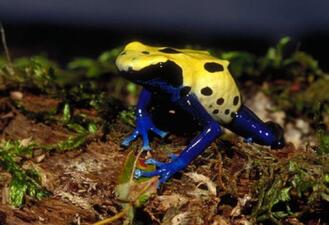
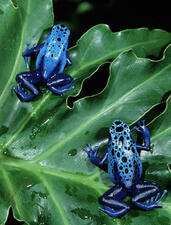
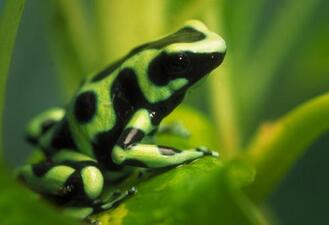
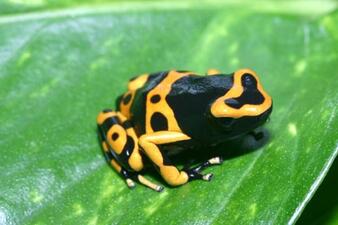
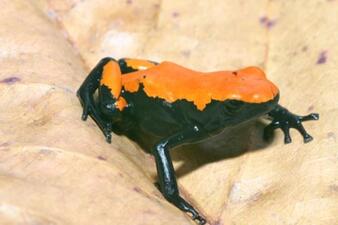
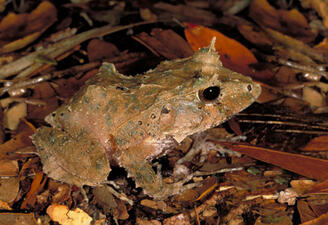
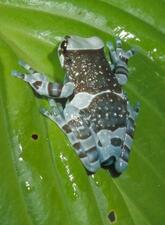
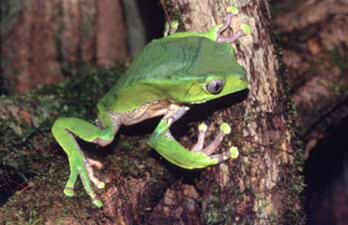
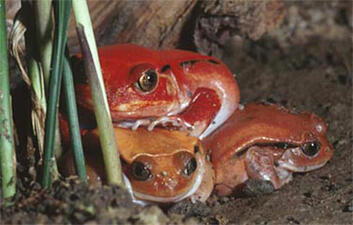
Brilliant orange, bright blue, dazzling red—frogs come in an astonishing array of colors. This vivid assortment of hues hints at the remarkable diversity that exists among the frog species inhabiting the globe. From lush rainforests to parched deserts, frogs are found in nearly every environment on Earth, and their survival strategies range from surprising to bizarre.
A pioneer in modern frog research, the American Museum of Natural History has one of the largest frog collections in the world. Museum expeditions to remote mountaintops, as well as surveys of local wetlands, continue to uncover new populations and species—but also reveal environmental changes that threaten frogs' existence. Many efforts are underway to reverse this downward trend globally and in our own backyards.
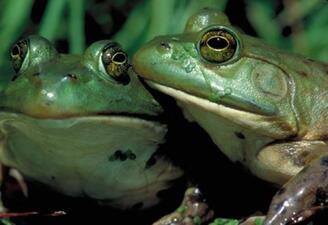
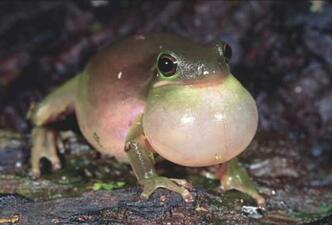
Frogs live almost everywhere—from tropical forests to frozen tundra and scorching deserts—and have an amazing range of survival strategies. Many frogs are more colorful than the most dazzling birds, and their voices have filled the night with song since the dawn of the dinosaurs.

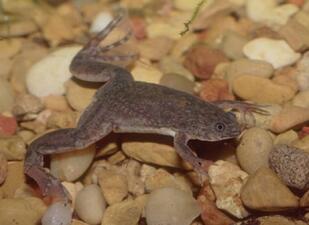
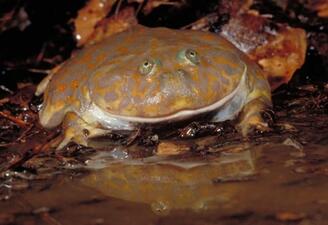
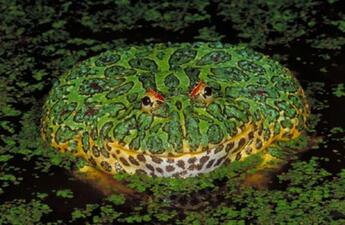
The 2013-2014 exhibition Frogs: A Chorus of Colors includes more than 20 species from around the world. Find out more about individual species and learn about green invaders, toothless predators, and more.
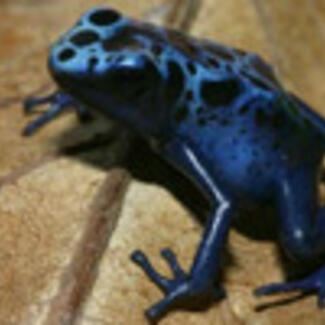
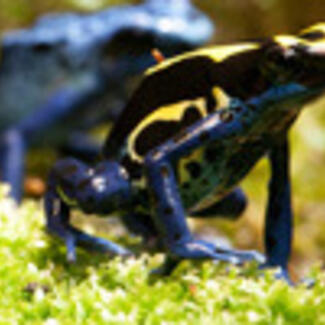
The brightly colored dart poison frogs of Central and South America broadcast a visual warning to predators: Do Not Eat! Many species in the frog family Dendrobatidae ooze poison through that spectacular skin as a defense against predators. Scientists are only now unraveling the mystery of how this mechanism evolved and how frogs maintain it.
In the most familiar reproductive mode, frogs begin their lives as eggs laid in water; soon, swimming tadpoles emerge, grow and metamorphose, eventually moving onto land to grow yet further into adults. But only about half of all frog species reproduce this way. Other methods abound--about 40 in total--some surprising and even bizarre.
Some 365 million years ago, finned, aquatic animals evolved into tetrapods, the first four-legged vertebrates. Over time this new animal group moved onto land and gave rise to mammals, reptiles (including birds), and amphibians.
Over the past 50 years scientists have recorded major declines in frog populations around the world. A few species have vanished completely. Many frog die-offs are the result of local human activity, but the epidemic has also reached remote areas. Is there a global cause?
For more than a century, herpetologists from the American Museum of Natural History have pioneered frog research worldwide. Expeditions to remote regions enable researchers to observe species in their natural habitats and collect specimens for further study.
Christopher J. Raxworthy's research focuses on Old World reptile and amphibian systematics and biogeography, especially the study of family relationships among species of chameleons.
More than 200 frog species live in Madagascar, 99 percent of which exist only on this California-sized island off the coast of Africa.
There is evidence that frogs have roamed the Earth for more than 200 million years, at least as long as the dinosaurs.
Frogs: A Chorus of Colors is presented with appreciation to Clyde Peeling's Reptiland.