SunScapes: Our Magnetic Star
Part of Curriculum Collections.

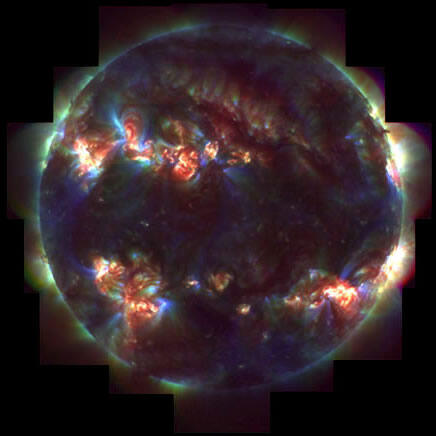
More than simply beautiful, these photographs from the National Aeronautics and Space Administration (NASA) allow astronomers to study in further detail the Sun’s magnetic field.As the star at the center of our solar system, the Sun makes life on Earth possible. But not all of its effects on our lives are beneficial: the Sun sporadically disrupts our weather patterns and interrupts our communication and navigation systems. It generates radiation that may harm astronauts and airline passengers. It can even push power grids to failure. All of these and other phenomena, including the many spectacular solar events shown in the following photographs, are controlled by the Sun’s variable magnetic field.
On Earth, there is a magnetic field that remains relatively stable over time. Explorers, surveyors, pilots and ship captains use this field to orient their compasses and to find their way around the globe. Even animals, like some migratory birds, can use the Earth’s magnetic field to navigate with their own internal compasses. But on the Sun, the magnetic field is much more erratic; there are many magnetic poles whose positions and strengths constantly change. Indeed, a compass on the Sun would merely point to the pole closest and strongest at that moment.
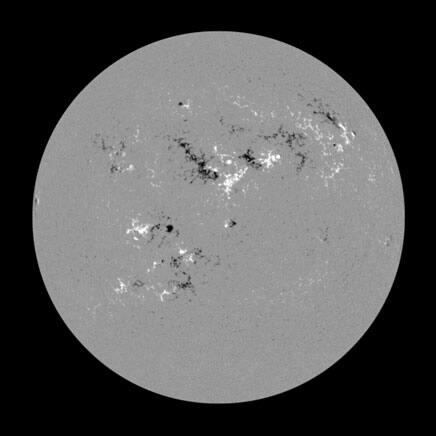
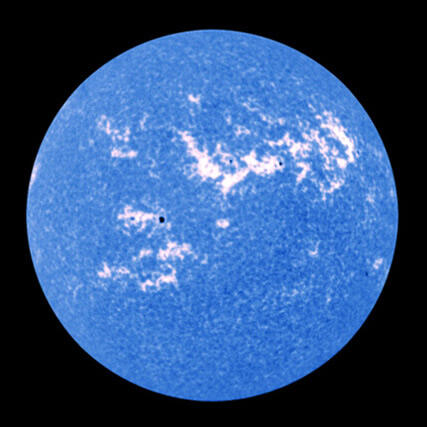
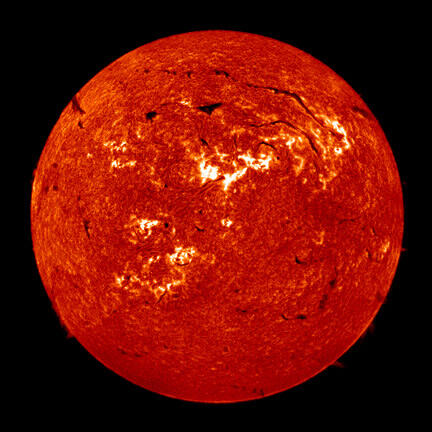
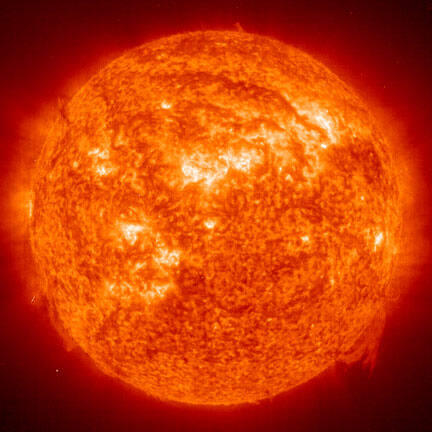
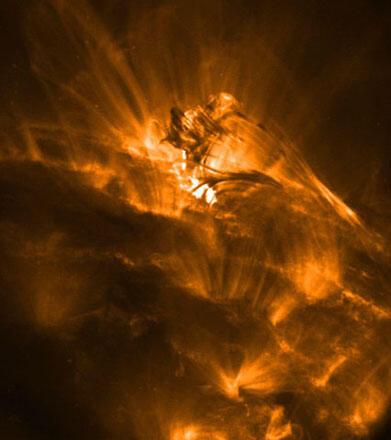
As troublesome as it is for us, the Sun’s magnetic field is also useful, as it makes direct observations of the Sun possible. All elements caught in the Sun’s magnetic field emit extreme ultraviolet light, invisible and exceptionally dangerous. Orbiting telescopes can detect such light and represent it as safe, visible, recognizable colors. More than simply beautiful, these photographs from the National Aeronautics and Space Administration (NASA) allow astronomers to study in further detail the Sun’s magnetic field.
The Yellow Sun?
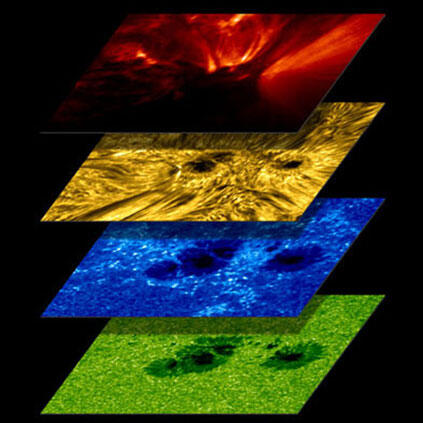
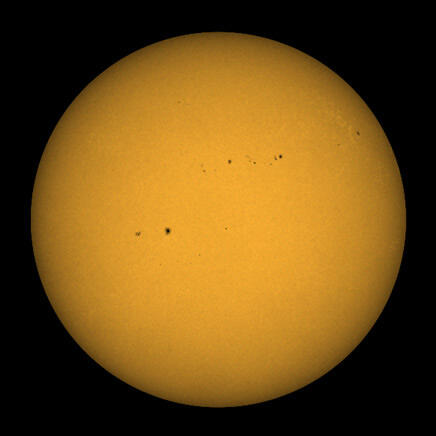
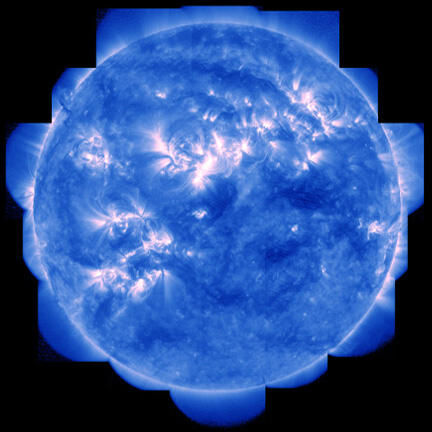
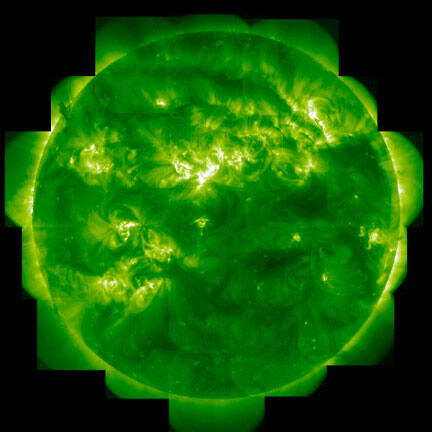
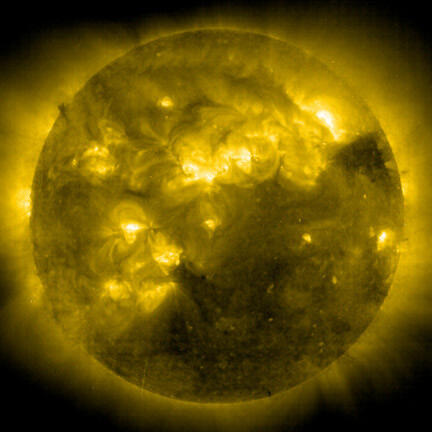
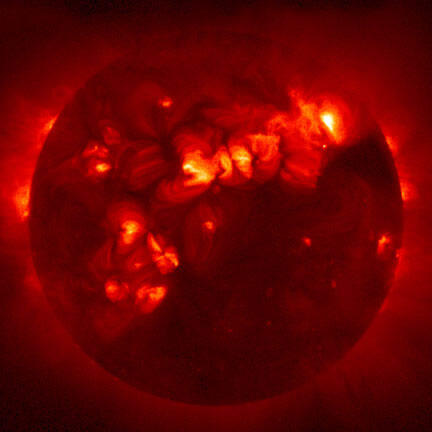
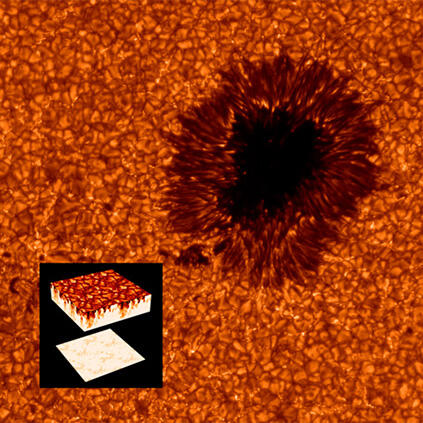
The Sun’s magnetic field heats its atmospheric gases to millions of degrees Celsius. Paradoxically, the gasses closest to the Sun are the coolest and densest and the ones farther away are hotter and more diffuse. At these different temperatures, the Sun’s atmosphere glows at different wavelengths or colors, most of which are invisible to the human eye. Indeed, the Sun emits all the colors of the spectrum of light, but gives off more yellow light than any other. In fact, when we look up at the Sun, our “yellow light” sensitive eyes only see the coolest part of its atmosphere, the gas glowing at visible wavelengths, itsphotosphere, as seen in this photograph. The hotter parts of the atmosphere farther away from the surface glow at wavelengths visible only to special optical systems and detectors. The following photographs, all taken on February 8th, 2001 by telescopes outfitted with such systems, show the Sun at a variety of wavelengths ranging from the visible, through the ultraviolet to the X-ray part of the spectrum. False colors were used in those images that depict the Sun at wavelengths outside of the visible spectrum, giving visual form to things we could never see with our own eyes.
The Solar Dynamo
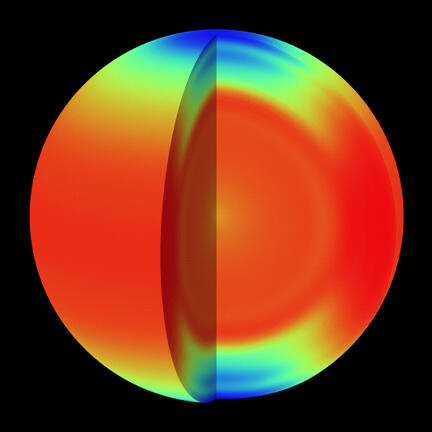
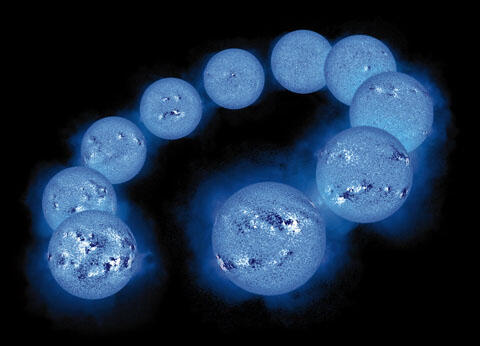
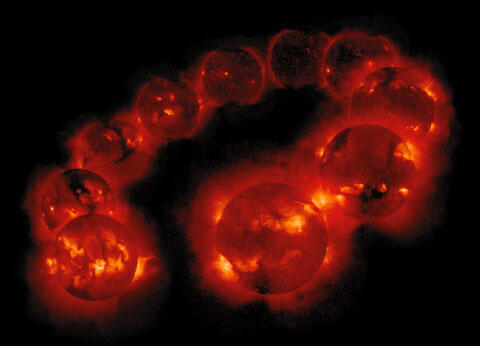
The Sun’s magnetic field is generated deep within its interior by a process referred to as thesolar dynamo. Though it is not yet fully understood, the solar dynamo is driven by the Sun’s differential solar rotation and the seething, convective motions that occur in the outermost layers of the star. These processes ensure that charged particles remain in constant motion, which generates magnetic fields that float to the surface. Magnetic regions of all sizes pop up all over the Sun, with the strongest fields clustering in fairly narrow belts on either side of the equator.
Thrown For A Loop
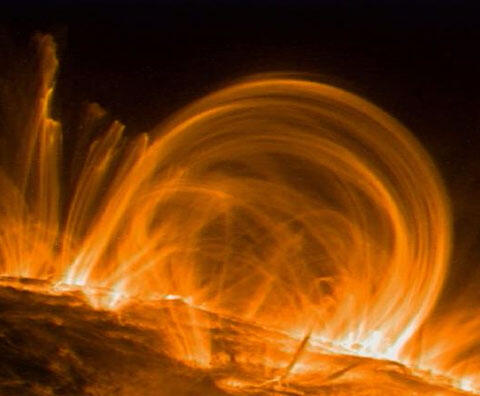
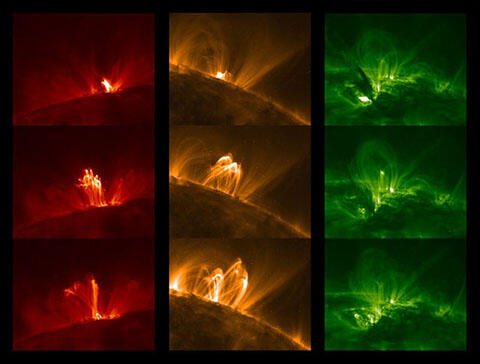
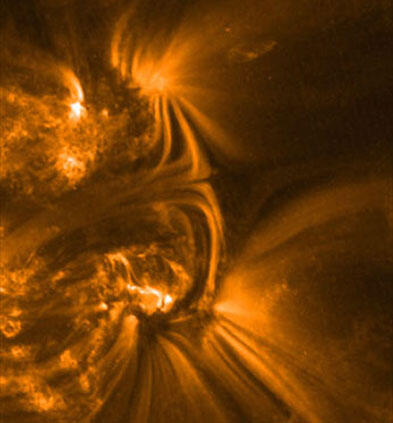
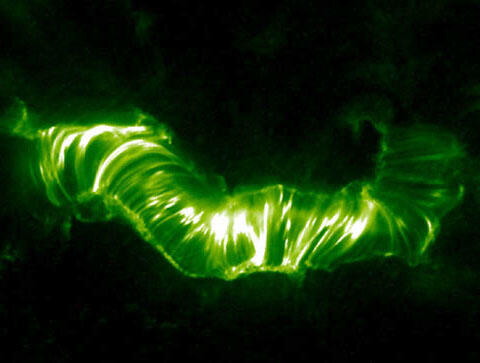
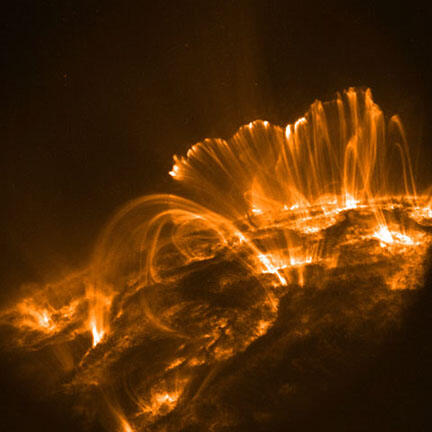
Most of the solar corona is made up of glowing loops of hot material that outline a magnetic field extending from one surface pole to its partner. The heating that is associated with the magnetic field warms gas at the base of the loops up to 550,000 degrees Celsius (1 million ºF) or more. This causes it to "evaporate" into the high regions of the atmosphere, where it is supported by the pressure of the gas below, balancing the Sun’s gravitational pull.
This image of a magnetically active region shows "loops" that connect one magnetic pole to another.
Solar Explosions
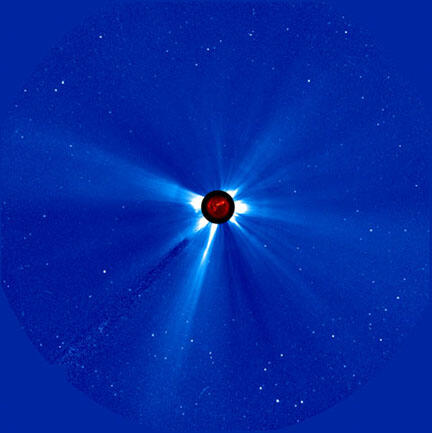
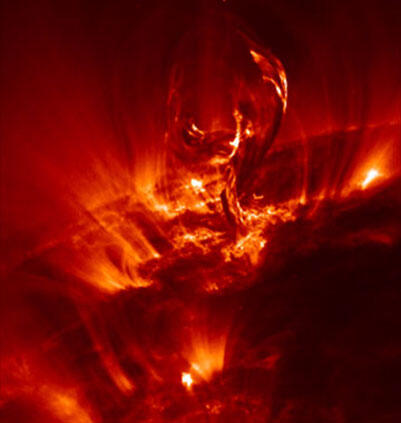
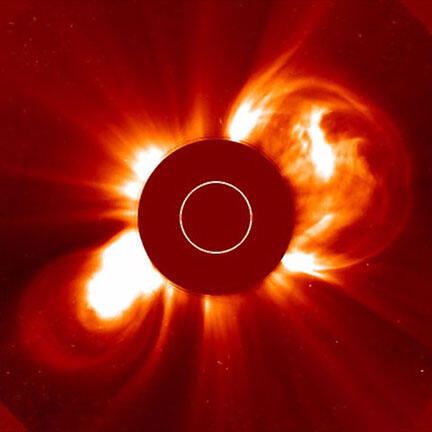
The activity and variability of the Sun’s magnetic field can cause large, eruptive, explosive events called coronal mass ejections (CMEs). In a CME, a total volume as large as that of the Mississippi River can be ejected into space in a matter of minutes, at speeds of hundreds of kilometers per second. Most of those erupting rivers of gas cannot escape the Sun's gravitational pull and soon fall back to the surface. Those that do escape can cause disruptions in Earth’s atmosphere and in our communication and navigation systems.
In filament eruptions like this one, relatively dense material of some 5,500 degrees Celsius (10,000 ºF) lifts rapidly from just above the solar surface, caught in the stretching, twisted magnetic field.
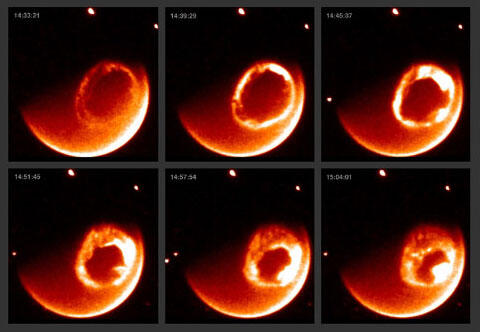
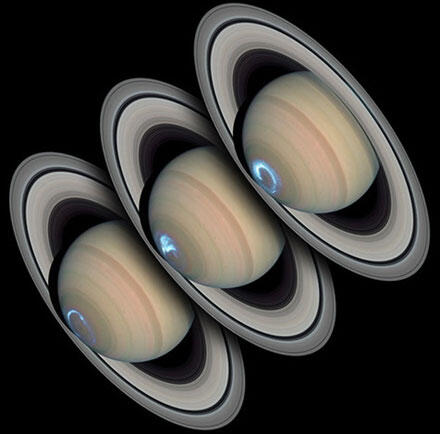

The images of the Sun are primarily from the NASA Transition Region and Coronal Explorer (TRACE) and the Extreme Ultraviolet Imaging Telescope (EIT), the Large Area Solar Coronal Observatory (LASCO) and the Michelson Doppler Imager (MDI) telescopes on the ESA/NASA Solar and Heliospheric Observatory (SOHO). Additional material is from the Japanese-American YOHKOH satellite, the Big Bear Solar Observatory, the National Solar Observatory at Kitt Peak, the Swedish Solar Observatory and courtesy of Åke Nordlund (Nordita, Kopenhagen).
Further information is available at http://www.lmsal.com/
The images of the Earth and Saturn are courtesy of NASA, the ESA and J.Clarke (Boston University).