Acquiring
2018 Constantine S. Niarchos Expedition to Wyoming: Uncovering the Late Jurassic. Denis Finnin/© AMNH
Museums use different methods to build their collections. The one that most people think of when we talk about collecting is excavation, but museums also obtain specimens through exchanges, loans, gifts, and even purchases. If you are a private collector, there are some locations where you are allowed to collect certain kinds of fossils; there are also some legitimate places where you can purchase fossils. However, there are also places where fossils are specially protected or where collecting is not permitted at all.
No matter how you acquire your fossils, it is essential that they are obtained legally. If you are collecting them yourself, then you almost certainly will need to obtain permission from someone first, whether a private landowner or a state or federal agency. If you are getting the fossils from someone else (as a gift or a purchase) then you need to be certain that person or organization had the appropriate permission to collect, and that they have genuinely and legally transferred the specimen to your ownership through sale or donation.
It is especially important to have thought about why you are collecting and what sort of specimens you will collect. This will help you decide whether a specimen would be a good addition (i.e., does it help you build a deeper collection, maybe with a specialty in a certain kind of specimen, or does it add a kind of specimen that you are lacking?). In museums, these principles are usually set out as part of a collection policy. Where rare or scientifically important specimens are concerned, you should consider whether you are really the best person to care for the specimen and to make it accessible for study or whether it should be in an accredited museum or university collection.
In order to become an official part of a museum collection a specimen must be accessioned, which makes the museum the legal owner and responsible for the care and preservation of that fossil. Whether it is held in a public or private collection, having the right paperwork to record the history of discovery and acquisition of the specimen should be as important as the actual fossil itself. This information is known as the specimen’s provenance.
For more information on what happens after a museum collects and accessions a fossil specimen, see the section on Storing.
Types of Acquisitions
Most institutions have a collections policy that, among other things, sets out some of the basic rules for what is acquired, as well as how and why.
The policy may stress that efforts should be concentrated on broadening the variety of fossils in a collection or specializing in a certain type of specimen (e.g., vertebrates or invertebrates). A collection policy can limit collecting to only excavated specimens or specify a ceiling on the price paid for specimens that are purchased. The goal of the policy is to make the best use of available resources to create a collection that best meets the aims of the institution. If you are a private collector, you may not need a written policy but it’s a good idea to think about the principles that will guide your collection decision-making.
Download an example of an acquisition policy from the Peabody Museum of Natural History at Yale University.
Whether you are collecting for an institution or yourself, all acquisitions must be legally obtained. Some issues that institutions should consider when acquiring specimens for their collections include:
- Are the specimens relevant to the scope and purposes of the institution’s collections?
- Can the institution provide for the storage, protection, and preservation of the objects under conditions that ensure their availability for institutional purposes and that are generally in keeping with professionally accepted standards?
- Can the objects remain in the collections as long as they retain their physical integrity, their authenticity, and their relevance for the purposes of the institution, or until it is decided that they should be deaccessioned for other purposes?
Private collectors should also consider whether they are in a position to make scientifically important specimens available to other users, over both the short and long term. This is a responsibility that museums typically accept when they acquire material for their collections. While there may be no legal requirement for private collectors to make their specimens accessible, it is generally a good thing for any paleontologist, whether amateur or professional, to promote responsible use of their collections.
Special Circumstances for Acquisitions
Under certain circumstances, such as when the material has been acquired from federally-owned land, it may not be possible for an institution to formally accession the material, because the government agency concerned cannot grant title to the museum. Provided that permission to collect the material has been formally granted, documentation has been gathered to support the collection and storage of materials, and agreement has been reached with all relevant parties, an institution can act as a repository for this material, treating it as a long-term loan or acting as caretaker.
For more information on acquisitions and Native American Lands consult 36 CFR 79: Curation of Federally-Owned and Administered Archaeological Collections or Managing Archaeological Collections.
Copies of any relevant documents that describe the current ownership of the specimen (e.g., collecting permits) should be kept on file, along with any receipts. If the specimen is being obtained from someone else, adequate documentation of legal collection, acquisition, and ownership will be an important factor in making the decision to incorporate the specimen into your collection.
Fossil specimens can be acquired in several ways: by purchase; as a gift; through exchange; or by carrying out field excavations.
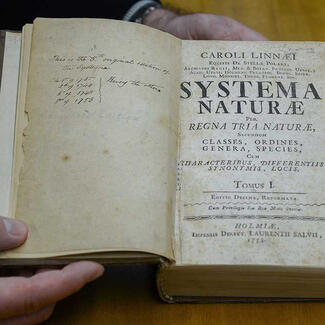
Purchased specimens should always be obtained from a reputable dealer. When buying a specimen, you should ask the dealer to demonstrate, in writing, that they are in possession of full and unencumbered title to the specimen, and that the specimen was obtained by them in full compliance with all the relevant local, state, Federal, and international laws, including those of the country of origin.
There is, unfortunately, a thriving market in illegally collected (and often illegally exported) fossils, and if you fail to check the provenance of the specimen properly, you are running the risk of acquiring stolen goods. If you are acquiring the specimen for a personal collection you should remember that a specimen with solid paperwork documenting its provenance is inherently more valuable scientifically.
It’s a good idea to require that the seller sign a specimen transfer form, which is a document containing a description of the object(s) involved and the precise conditions of transfer. Copies of all invoices, bills of sale, and receipts relating to the purchase should be kept on file permanently.
For more information on specimen data and documentation see Specimen data.
Online Purchases
There has been an increase in the use of the Internet for the sale and purchase of fossil specimens. As with any valuable item purchased over the Internet, the buyer must use particular caution. Documentation on the ownership, provenance and legality of the specimen should be required in advance.
In their Policy Statement regarding the sale of vertebrate fossils online, The Society of Vertebrate Paleontology states “The barter, sale, or purchase of scientifically significant vertebrate fossils is not condoned, unless it brings them into or keeps them within a public trust. We are deeply concerned by the on-line, auction sale of vertebrate fossils, as the nature of the process cannot assure that scientifically significant fossils are deposited into not-for-profit scientific and educational institutions.”
When acquiring a specimen as a gift, it is essential to find out whether the donor has the right to give it to you, and to be certain that it really is being given to you.
In general, you should avoid accepting gifts that have conditions attached. When a museum acquires a specimen, or collection of specimens, as a gift, written confirmation of ownership should always be obtained in advance from the donor. No specimens should be accepted without adequate evidence of legal title on the part of the donor. This evidence can include permits, provenance, and history. Also, by definition, gifts are given free of charge and without requiring exchange of some other specimen.
As with purchased specimens, it’s advisable that the donor sign a specimen transfer form—a document that includes a description of the objects involved and the precise conditions of transfer. Any documentation which strengthens the evidence for the donor’s ownership of the specimen, including collecting permits, bills of sale, or receipts, should also be provided.
By signing a specimen transfer form, the donor is acknowledging that they own the specimen and that they are transferring ownership to the museum or collector. You should not accept specimens into your collection unless you have a signed specimen transfer form or equivalent letter.
Encumbrances
When a specimen is to be acquired, it is essential to detail any encumbrances, or conditions attached to ownership, care or use of the specimen, such as:
- Restrictions as to title (e.g., the specimen is not given outright to the institution but on “permanent” long-term loan).
- Right of possession (e.g., the specimen is gifted to the institution, but will remain in possession of the donor until his/her death).
- Care (e.g., that the specimen should be prepared or stored in a particular manner or that it may never be disposed of).
- Exhibition (e.g., that the specimen be temporarily or permanently displayed).
Generally speaking, you should avoid accepting specimens which have conditions attached. While you may think the conditions are reasonable at the time of donation, such requirements can become a serious future burden to you and your institution.
Valuations
From time to time, donors may ask the museum to provide an estimate of the monetary value of the specimen or collection, usually for tax purposes. For ethical reasons, museum staff are generally prohibited from giving appraisals of specimens that are offered for donation. Valuations are best undertaken by an assessor who is external and independent to the institution in question. For more information on documentation, see the section on specimen data.
Exchanges are generally carried out to improve a collection by replacing duplicate or no-longer-needed specimens with specimens that meet the current wants or needs of the institution.
The expectation is that the specimens exchanged will be of like kind or like value. In principal, almost any specimen can be traded; however, there are some specimens that probably should not be eligible for exchange: type specimens, specimens on display, one-of-a-kind specimens, or those covered by a gift restriction might not be appropriate for exchange without substantial justification.
In an exchange, proper de-accessioning procedures should be followed.
Fieldwork, involving prospecting for, excavating and collecting fossils, is what most people think of when they hear the word paleontology.
Popular culture references to excavation make it seem exciting and glamorous. While it certainly can be thrilling to be the first person to find a fossil that has been buried for millions of years, most excavation is careful, painstaking and often tedious work. This is because the information associated with the specimen is as important as the actual fossil, and fossil collection often is as much about collecting data is it is about collecting specimens.
The complete scientific value of the specimen is determined by these data. For example, the sediments around the fossil can help establish its age. The presence of other fossils in the site can give us insights into the climate and ecology of the organism, while their position and relation to each other can show, for example, how the animals died and what happened to the bodies after their death. Collectors, whether amateur or professional, have to collect as much contextual information as their expertise allows. As the Society of Vertebrate Paleontology Policy Statement on Collecting states: "even if the fossils legally remain in private collections for some time…the scientific and educational value of the fossils depends on their contextual information as well as their morphology."
This website is not a resource for excavation techniques, but there are many useful resources available on the internet.
How do I obtain permission to collect?
It is important that all paleontologists follow the basic tenets of good collecting. The first, and most important, is that all fossil collecting, whether on public or private lands, requires you to obtain the proper permission. Depending on where you collect, this may involve getting permission from a private landowner, a state or federal agency, a tribal council, or some other group. For private landowners, a letter of permission may be sufficient, but for most other groups or organizations a formal permit will be required, which will specify what material can be collected and where it will ultimately be housed. In general, collection of fossils on public lands is only allowable if the fossils will be in a public repository. In some situations, you may be required to pay a fee to collect. Policies on what may be collected and where vary widely according to federal, state and local regulations, and it is your responsibility to research and understand this thoroughly. You may also have to undertake extensive research into land ownership to ensure that you are getting permission from the right person and in the right way.
Institutions or private collectors acquiring specimens during field research and expeditions must do so with the agreement of, and in compliance with the laws of the host state, government or country. In the case of importation of foreign specimens, it is the responsibility of the collector to ensure compliance with all applicable State, Provincial, Federal or other appropriate governmental laws.
For more information on permits check some of the following links.
- Bureau of Land Management
- National Park Service
- In particular, institutions should consult 36 CFR 79: Curation of Federally-Owned and Administered Archaeological Collections.
What kinds of data and records should I keep in the field?
As we’ve already discussed, much of the value of fossils comes from their contextual information. For this reason, it is essential that both amateur and professional collectors record as much information as possible about their fossils’ provenance in terms of stratigraphic, geographic, taphonomic and paleoenvironmental information.
It is important that the field data, whether in the form of notebooks, photographs, videos, electronic files, or any other format, always accompany fossils to wherever they are ultimately stored. Original field data (or a legible copy of it) should become part of the fossil collection or related archives, and should always be passed on with the fossils if the collection is donated to or deposited in another institution.
In an excavation a catalog generally is maintained, where excavation numbers are assigned to specimens as they are collected. This number is used to associate the relevant excavation information until the specimen is cataloged.
For more information on data and record keeping see specimen data.
Collecting Tips
- If more than one institution is involved in collecting, it is a good idea for the institutions to have a written agreement setting out, for example, whether the fossils that are collected will go to one institution or be divided between different ones, or how the collection will be used for research and who will have the right to work on it. Ideally this agreement should be in place before the fieldwork commences. This is particularly important when collecting in another country
- Make sure that you have all the relevant permissions in place from local, state, and national authorities, and from any private landowners. Finding out what permissions are required may be a lengthy process, especially if the fieldwork is taking place in another country.
- Retain copies of collecting permits, together with any other documentation in accession files or notebooks.
- The collection of material must follow the conditions specified in any permits granted, as well as any collection policy strategies set down by the institution.
Find sources, additional reading, and a bibliography on the Resources page.
These Collection Management resources were originally developed in 2007 with the support of the National Science Foundation (NSF).